

Toyota forklifts use advanced lithium-ion battery systems designed for electric material handling, fast charging, long service life, and reduced maintenance in demanding warehouse operations.
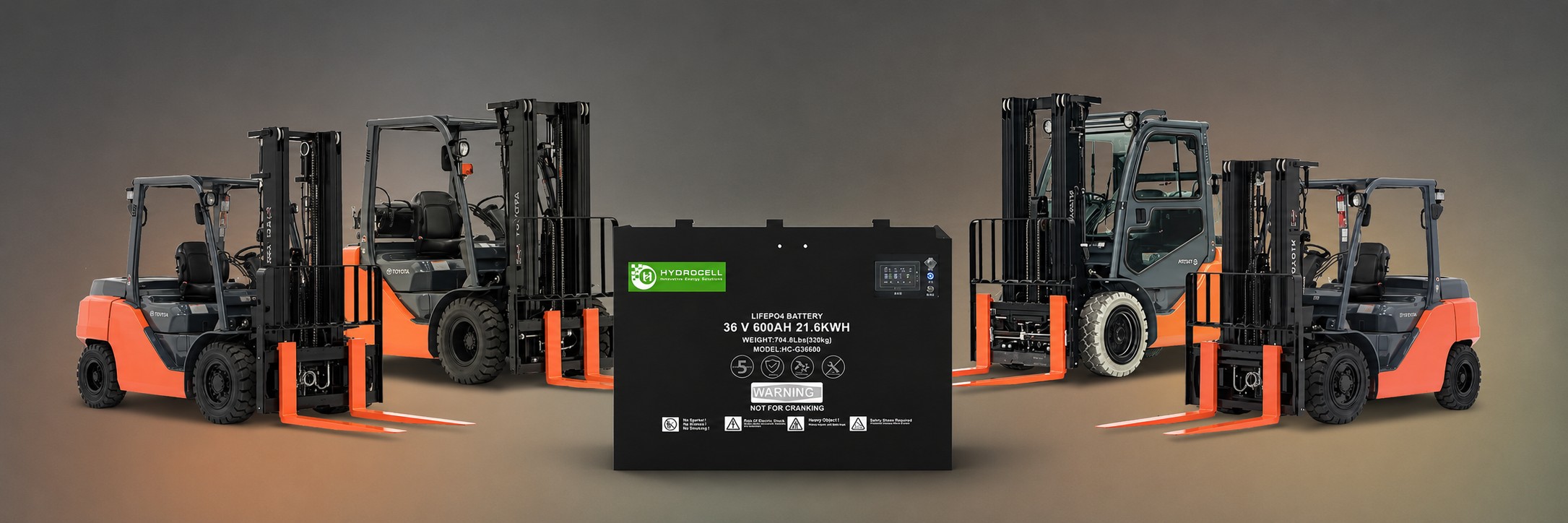
Yes. Toyota offers lithium-ion battery solutions for electric forklifts and material handling equipment. These systems are designed to reduce charging downtime, simplify maintenance, and support high-efficiency warehouse operations. Compared with traditional lead-acid forklift batteries, lithium-ion batteries can deliver faster charging, better energy efficiency, and lower routine maintenance requirements.
Toyota’s lithium-ion battery programs are primarily designed as integrated forklift energy solutions. That means the correct battery is not chosen by voltage alone. It must also match the truck model, battery compartment, counterweight requirement, charger, connector, communication system, and application duty cycle.
Toyota manufactures and supplies its own lithium-ion battery options for electric forklifts. In the broader forklift and electric vehicle battery market, lithium-ion systems may use chemistries such as NCA, NMC, or LiFePO4 depending on the application, performance target, safety design, and regional product line.
Toyota forklift lithium-ion batteries are commonly available across 24V, 36V, and 48V classes. Smaller warehouse trucks often use lower-voltage systems, while larger counterbalance forklifts typically require higher-voltage battery platforms for stronger power delivery and longer runtime.
Important Note: Always confirm lithium battery compatibility with the forklift manufacturer, dealer, or certified technician before replacing any Toyota forklift battery. Voltage, weight, BMS communication, charger profile, and counterbalance requirements must match the truck.
Lithium-ion batteries are increasingly popular in forklift fleets because they support opportunity charging, require less maintenance, and reduce the need for battery watering rooms. For multi-shift warehouses, this can improve productivity by keeping forklifts in operation longer.
Unlike lead-acid batteries, lithium-ion forklift batteries do not require regular watering, acid-level checks, or long cool-down periods after charging. This makes them especially useful in logistics centers, cold storage facilities, manufacturing plants, and high-throughput warehouses.
For companies comparing replacement or alternative lithium-ion forklift battery options, hydrocell offers lithium battery lines engineered for different voltage, capacity, performance, and warranty needs.
The following hydrocell forklift battery models can be considered for industrial lithium battery applications where technical compatibility is properly verified.
| Model | Weight | Voltage | Cycle Life | Best Application |
|---|---|---|---|---|
| HC-F24200 | 63 kg | 24V | More than 3500 cycles | Small electric forklifts, pallet trucks, walkie stackers, and light warehouse equipment |
| HC-F36450 | 300 kg | 36V | More than 3500 cycles | Medium-duty electric forklifts and warehouse handling equipment |
| HC-F36600 | 320 kg | 36V | More than 3500 cycles | Longer-runtime 36V forklift applications with heavier duty cycles |
| HC-F48330 | 310 kg | 48V | More than 3500 cycles | 48V electric forklifts requiring higher power and stronger industrial performance |
Choosing a lithium battery for a Toyota forklift requires more than matching the voltage. Forklifts depend on battery weight for stability, especially counterbalance models. If a lithium replacement is too light, it may affect lifting capacity and safety.
Confirm forklift voltage: Check whether the Toyota forklift requires a 24V, 36V, or 48V battery system.
Verify battery compartment size: Measure the original battery tray and compare it with the replacement battery dimensions.
Check battery weight: Make sure the battery maintains proper counterbalance and does not reduce safe lifting capacity.
Match charger compatibility: Use a lithium-compatible charger with the correct voltage, current, and charging profile.
Confirm BMS communication: Ensure the battery management system works properly with the forklift and display system.
The HC-F48330 is a 48V lithium battery option that may fit certain higher-power electric forklift applications when compatibility is confirmed. Its 310 kg weight and 3500+ cycle design make it suitable for industrial users looking for long service life and stable performance.
Because many larger Toyota electric forklifts use 48V-class systems, this model may be considered by fleet managers evaluating lithium battery options. However, installation should always be reviewed by a qualified technician to ensure safe operation.
For smaller Toyota electric warehouse equipment, the HC-F24200 provides a 24V lithium option with a lighter 63 kg design. This makes it more suitable for compact equipment rather than large counterbalance forklifts.
For 36V applications, the HC-F36450 and HC-F36600 provide heavier lithium battery options for more demanding warehouse operations. The correct choice depends on runtime requirements, compartment fit, weight balance, and charger compatibility.
| Category | Toyota Lithium-Ion Battery | Aftermarket Lithium Battery |
|---|---|---|
| Compatibility | Designed for Toyota forklift integration | Must be checked carefully before installation |
| Voltage Options | Commonly available in 24V, 36V, and 48V classes | Available in multiple voltages depending on supplier |
| Maintenance | Low maintenance compared with lead-acid | Low maintenance if properly designed and installed |
| Warranty | Supported through Toyota dealer network | Depends on battery supplier and installation conditions |
| Best For | Fleet operators prioritizing factory integration | Buyers seeking flexible replacement or upgrade options |
Lithium-ion batteries offer several advantages for electric forklifts. They charge faster, support opportunity charging, and maintain more consistent voltage during operation. This helps forklifts deliver reliable performance throughout the shift.
For warehouses with high equipment utilization, lithium-ion batteries can reduce downtime and eliminate the need for spare battery rooms. These benefits are especially valuable in multi-shift logistics, cold storage, food distribution, and manufacturing facilities.
Toyota uses integrated lithium-ion battery systems for its electric forklifts, commonly available in 24V, 36V, and 48V configurations. The exact battery depends on the forklift model and application. For businesses comparing replacement or alternative options, hydrocell offers several lithium battery models, including the HC-F48330, HC-F24200, HC-F36450, and HC-F36600. Before making a replacement decision, always verify voltage, size, weight, charger compatibility, and BMS integration with a certified professional.