

Lithium and alkaline batteries may look similar in some consumer formats, but they perform very differently. Alkaline batteries are inexpensive, widely available, and well suited to low-drain devices such as clocks and remote controls. Lithium batteries generally offer higher energy density, lower weight, longer storage life, and stronger performance under demanding loads or harsh temperatures. Rechargeable lithium chemistries such as LiFePO4, including hydrocell batteries, are designed for a different class of applications such as golf carts, marine equipment, forklifts, solar storage, and other high-energy systems.
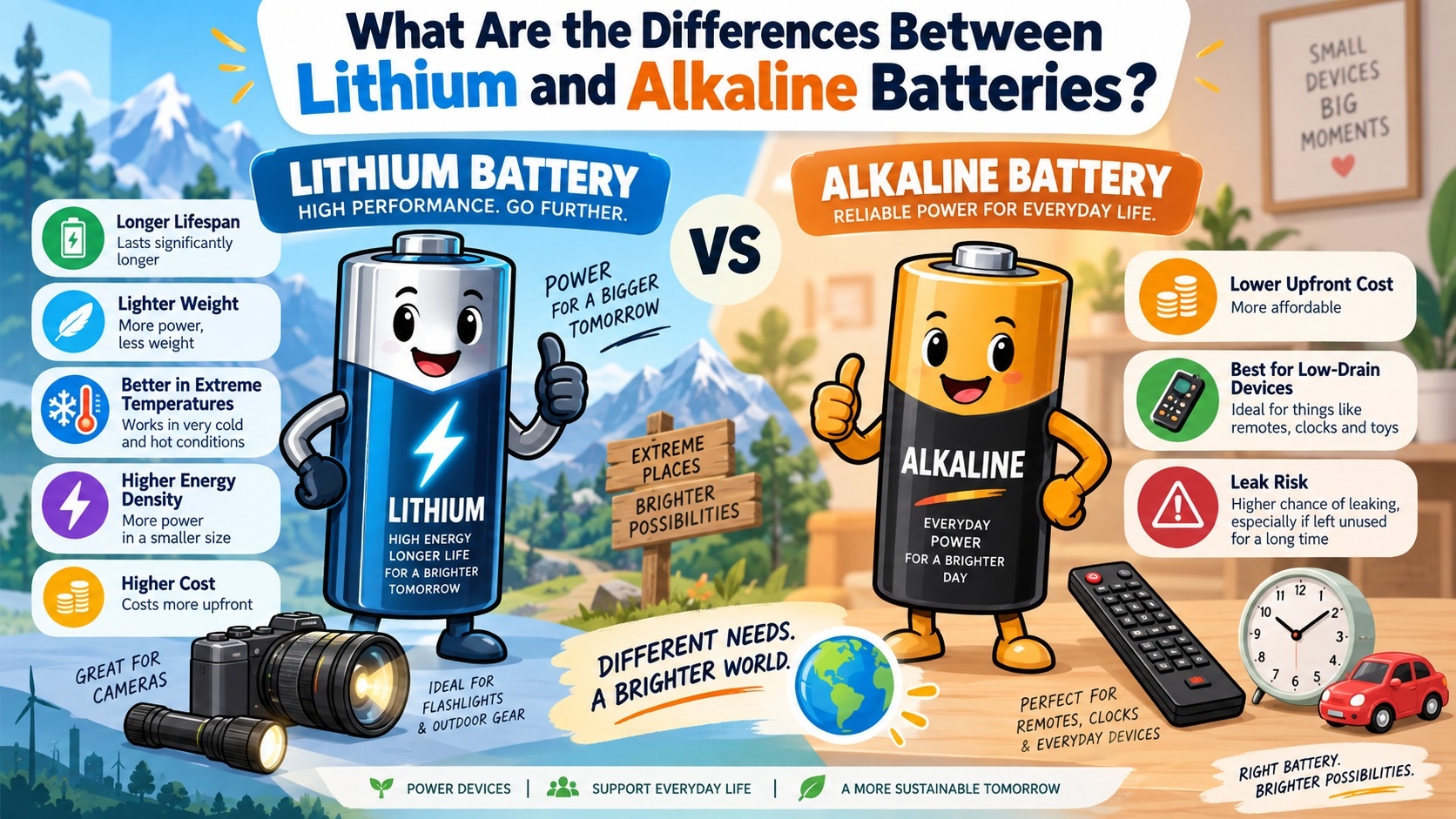
Lithium vs. Alkaline Batteries at a Glance
| Feature | Lithium Batteries | Alkaline Batteries |
|---|---|---|
| Upfront Cost | Higher | Lower |
| Energy Density | Higher | Lower |
| Weight | Generally lighter | Generally heavier for similar usable energy |
| Cold-Weather Performance | Usually better | Performance drops more noticeably |
| Shelf Life | Often very long for primary lithium cells | Generally shorter |
| Leak Risk | Lower for many modern lithium designs | Can leak corrosive electrolyte as they age |
| Best Use | High-drain, lightweight, demanding or rechargeable systems | Low-drain everyday devices |
1. Cost: Alkaline Is Cheaper Upfront
The most obvious difference is purchase price.
Alkaline batteries are inexpensive and easy to find in supermarkets, hardware stores, and convenience stores. For low-power devices that consume energy slowly, they can be very economical.
Good alkaline applications include:
TV remote controls
Wall clocks
Basic timers
Low-power toys
Simple household sensors
Lithium batteries typically cost more at the beginning, but in high-drain applications they may last significantly longer or provide better voltage stability.
Do not compare batteries only by purchase price. In high-drain equipment, a battery that lasts longer, maintains voltage better, or can be recharged may provide a lower lifetime cost.
2. Energy Density
Lithium chemistry can store more energy for a given weight and volume than conventional alkaline chemistry.
That is why lithium technology is widely used where designers want more runtime without dramatically increasing battery size.
Higher energy density is especially valuable in:
Portable electronics
Golf carts
Forklifts
Marine equipment
Energy storage
Mobile power systems
3. Lifespan and Shelf Life
Primary lithium batteries are known for very low self-discharge and long storage life.
Depending on chemistry, manufacturer, and storage conditions, some primary lithium batteries may be rated for approximately 10 to 20 years of shelf life.
Alkaline batteries commonly offer roughly 5 to 10 years of shelf life, although exact ratings vary by product.
Rechargeable lithium batteries should be evaluated differently. Their value is based more on:
Cycle life
Depth of discharge
Charging behavior
Temperature management
Battery Management System protection
The long 10–20 year shelf-life figures usually refer to primary, non-rechargeable lithium batteries. Rechargeable LiFePO4 systems such as Hydrocell products are evaluated mainly by cycle life, service life, and usable energy rather than disposable-cell shelf life alone.
4. Performance in Cold and Hot Weather
Lithium batteries generally perform better than alkaline batteries at low temperatures.
Cold conditions slow the chemical reactions inside all batteries, but alkaline cells tend to experience more noticeable voltage drop and capacity loss.
Lithium primary cells can maintain stronger performance in freezing conditions, making them popular for:
Outdoor cameras
High-performance flashlights
Emergency equipment
Cold-weather electronics
Rechargeable lithium systems also perform well in demanding environments, although charging limits must be respected.
For example, many standard LiFePO4 batteries should not be charged below approximately 0°C unless the battery includes a suitable low-temperature charging or heating system.
5. Weight
Lithium technology can deliver more usable energy with less weight.
This matters in portable devices and vehicles because every kilogram affects:
Efficiency
Handling
Payload
Installation effort
For mobile applications such as golf carts, marine systems, and RVs, reducing battery weight can improve overall equipment efficiency.
6. Voltage Behavior
Alkaline batteries gradually lose voltage as they discharge.
This can cause some devices to become slower or dimmer before the battery is completely depleted.
Many lithium chemistries maintain a flatter discharge curve, providing more consistent voltage through much of their usable capacity.
This can be especially useful for motors, electronic controllers, and high-drain equipment.
7. Leak Risk
Old alkaline batteries are well known for occasionally leaking corrosive electrolyte.
This leakage can damage:
Battery terminals
Circuit boards
Remote controls
Toys
Flashlights
Lithium batteries generally have a lower risk of the familiar alkaline-style corrosive leakage, although damaged lithium batteries can present their own safety concerns.
Never use a swollen, cracked, overheated, leaking, or physically damaged lithium battery. Lithium systems require chemistry-specific handling and should not be treated like leaking alkaline cells.
8. High-Drain Performance
Lithium batteries are usually much better suited to equipment that demands high current.
Examples include:
Digital cameras
High-output flashlights
Motorized equipment
Electric vehicles
Power equipment
Industrial machinery
Alkaline batteries work best when current demand is relatively low and steady.
Best Uses for Alkaline Batteries
Alkaline batteries remain a very practical choice when cost matters more than maximum performance.
| Device | Why Alkaline Works Well |
|---|---|
| TV Remote | Very low power consumption |
| Wall Clock | Slow, steady discharge |
| Basic Timer | Low current requirement |
| Simple Toy | Low-cost battery replacement |
Best Uses for Lithium Batteries
Lithium batteries are preferable when performance demands increase.
| Application | Why Lithium Is Better Suited |
|---|---|
| Digital Camera | Higher current demand |
| High-Lumen Flashlight | Better power delivery |
| Outdoor Equipment | Improved cold-temperature performance |
| Electric Vehicles | High energy density and rechargeability |
| Industrial Equipment | High current and repeated cycling |
Disposable Lithium vs. Rechargeable Lithium
The word “lithium” covers several different battery chemistries.
Two broad groups are important:
Primary Lithium Batteries
These are non-rechargeable cells commonly used in cameras, sensors, medical equipment, and other devices requiring long storage life.
Rechargeable Lithium Batteries
These include lithium-ion and lithium iron phosphate batteries designed for repeated charging.
LiFePO4 systems are commonly used in larger applications because they offer long cycle life and strong thermal stability.
A rechargeable lithium battery and a disposable alkaline battery may have completely different voltages, charging requirements, dimensions, and electronics. Never substitute one chemistry unless the device is specifically designed to support it.
What Makes LiFePO4 Different?
Lithium iron phosphate is a rechargeable lithium chemistry particularly suited to deep-cycle use.
Typical advantages include:
Long cycle life
Stable voltage output
Strong thermal stability
No routine watering
Good deep-cycle capability
Integrated BMS compatibility
These characteristics explain why LiFePO4 is widely used in mobility, energy storage, marine, and industrial applications.
Which Products Are Suitable for Hydrocell Batteries?
hydrocell batteries focus on rechargeable lithium solutions rather than disposable household alkaline replacement cells.
They are designed for larger systems where repeated cycling, dependable energy delivery, and low routine maintenance are important.
Hydrocell Batteries for Golf Carts
Hydrocell offers lithium battery systems for golf carts, including replacement solutions designed for popular vehicle platforms such as Club Car, E-Z-GO, and Yamaha configurations.
Benefits can include:
Longer cycle life
Consistent voltage
Fast charging
Reduced routine maintenance
No flooded-battery watering
Marine and Trolling Motor Applications
Deep-cycle hydrocell batteries can also support marine applications.
Typical uses include:
Trolling motors
Marine electronics
Fish finders
Boat auxiliary systems
Lithium technology is particularly attractive in marine applications because lower battery weight can reduce overall onboard mass.
Automotive Starting and Generator Batteries
Hydrocell also offers lithium starting-battery configurations for applications that require strong short-duration current.
These can include:
Automotive starting
Electric-start generators
Other compatible high-current starting applications
A starting battery should always be matched to the required voltage, starting current, charging system, and equipment specification.
Portable Power Stations and Solar Storage
Lithium battery technology is widely used in portable and stationary energy systems.
Possible applications include:
Backup power
Solar energy storage
Phone charging
USB-C laptop charging
Small appliances
Off-grid equipment
These systems typically combine lithium cells with a BMS, inverter, charging electronics, and multiple output ports.
Industrial Forklift Batteries
Forklifts require high-current battery systems capable of powering both traction motors and hydraulic operations.
Hydrocell lithium forklift battery solutions can support:
Warehouse operations
Multi-shift material handling
Opportunity charging
Fast charging
Reduced routine battery maintenance
Hydrocell batteries are best suited to rechargeable applications such as golf carts, marine equipment, forklifts, RVs, starting systems, portable power, and solar energy storage rather than simple household devices such as clocks or TV remotes.
Alkaline vs. Hydrocell LiFePO4 Batteries
| Feature | Alkaline Battery | Hydrocell LiFePO4 Battery |
|---|---|---|
| Rechargeable | Usually no | Yes |
| Typical Size | Small household cells | Deep-cycle and high-capacity packs |
| Best Applications | Remotes, clocks, timers | Golf carts, marine, forklifts, storage |
| Battery Management System | Normally none | Integrated in modern lithium packs |
| Maintenance | Replace when depleted | Recharge repeatedly with minimal routine upkeep |
How to Choose Between Lithium and Alkaline
Check whether the device requires rechargeable or disposable batteries.
Verify the correct voltage.
Consider current demand.
Check expected operating temperature.
Consider device weight.
Compare initial price with lifetime cost.
Never substitute battery chemistry without confirming compatibility.
Conclusion
The biggest difference between lithium and alkaline batteries is the balance between cost and performance.
Alkaline batteries are inexpensive and remain an excellent choice for low-drain household devices such as remote controls, wall clocks, and basic timers.
Lithium batteries cost more, but generally provide higher energy density, lower weight, stronger high-drain performance, and better operation in demanding temperatures.
Primary lithium batteries can also provide exceptionally long shelf life, often far longer than typical alkaline cells. Rechargeable lithium chemistries such as LiFePO4 should be evaluated differently because their biggest advantages are repeated cycling, long service life, low maintenance, and stable power delivery.
For high-energy rechargeable applications, hydrocell batteries provide LiFePO4 solutions for golf carts, marine and trolling equipment, automotive starting, generators, portable power, solar storage, and industrial forklift systems.
The best battery is therefore not simply the chemistry with the highest specifications. It is the battery whose voltage, capacity, current capability, temperature range, physical size, charging system, and intended application correctly match the equipment it powers.