

EZGO electric golf carts have traditionally used deep-cycle lead-acid Batteries arranged in 36V or 48V systems, while newer lithium conversions often use a single integrated 48V or 51.2V battery pack. For many owners, switching to LiFePO4 is the most practical upgrade because it can reduce weight, improve voltage stability, simplify maintenance, and support faster charging. A properly matched hydrocell Battery can be a strong option when the pack voltage, capacity, charger, current capability, dimensions, and BMS are compatible with the specific EZGO model.
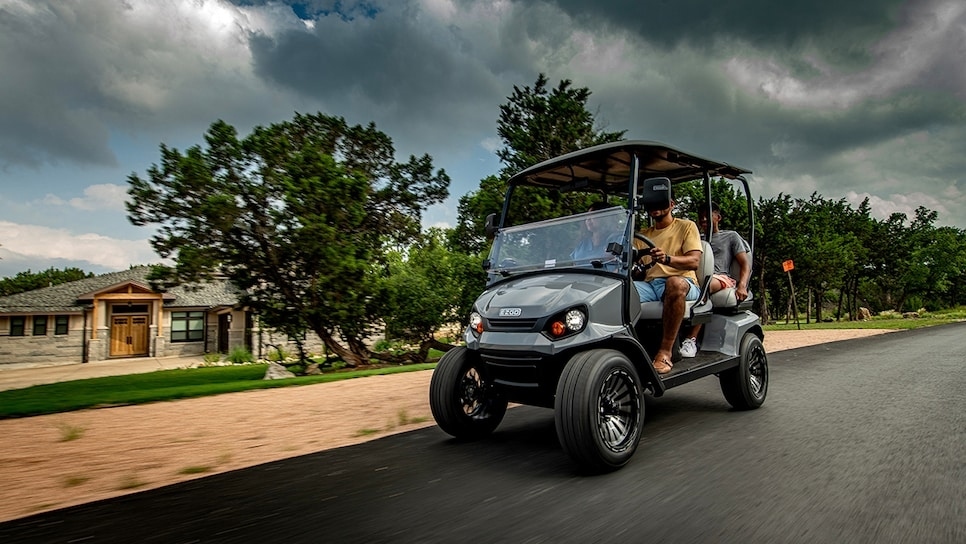
What Batteries Does an EZGO Golf Cart Use?
EZGO golf carts can use different battery configurations depending on model year, drivetrain, and original electrical system.
Common configurations include:
36V lead-acid systems
48V lead-acid systems
48V-class lithium systems
Single 51.2V LiFePO4 packs in compatible conversions
Older carts often use multiple 6V, 8V, or 12V deep-cycle batteries connected in series to create the required total pack voltage.
| EZGO Battery System | Typical Configuration | Best Fit |
|---|---|---|
| 36V Lead-Acid | Multiple deep-cycle batteries connected in series | Older standard EZGO carts |
| 48V Lead-Acid | Multiple 8V or 12V deep-cycle batteries | Many later-model carts |
| 48V-Class Lithium | Single LiFePO4 pack | Modern lithium upgrades |
| 51.2V LiFePO4 | 16-cell nominal lithium pack | Common 48V lithium conversion architecture |
Why LiFePO4 Is a Popular EZGO Upgrade
Lithium iron phosphate batteries offer several practical advantages over conventional flooded lead-acid batteries.
For golf cart owners, the biggest benefits are usually:
Lower battery weight
Longer cycle life
More usable energy
Faster charging
No routine watering
Stable voltage under load
Integrated BMS protection
That combination can make the cart easier to own and more consistent during everyday driving.
A lithium conversion is not simply a matter of matching the label “48V.” The battery must also match the cart’s controller, charger, wiring, current demand, and physical installation requirements.
What Lithium Battery Should I Get for My Golf Cart?
For many standard 48V golf carts, a 48V-class LiFePO4 battery around 100–105Ah provides a useful balance between range, weight, charging time, and cost.
A 51.2V 105Ah LiFePO4 pack is particularly common because LiFePO4 cells have a nominal voltage of about 3.2V each. Sixteen cells in series create a nominal pack voltage of approximately 51.2V.
A properly configured 105Ah system can work well for:
Daily neighborhood driving
Golf course use
Moderate hills
Two- and four-passenger carts
Typical recreational use
For heavier carts, lifted carts, upgraded motors, high-current controllers, or more demanding terrain, a larger-capacity or higher-current pack may be more appropriate.
Why 105Ah Is a Good Middle Ground
Battery capacity is measured in amp-hours, or Ah.
A 105Ah battery can provide more stored energy than a smaller 60Ah or 80Ah pack, while remaining more compact and affordable than very large 150Ah or 180Ah options.
| Capacity | Typical Use | Main Advantage |
|---|---|---|
| 60–80Ah | Light use and shorter trips | Lower cost and weight |
| 100–105Ah | General recreational use | Strong balance of range and size |
| 150–160Ah | Longer-distance or heavier use | More range |
| 180Ah+ | High-demand applications | Maximum energy capacity |
How Much Range Can a 48V 105Ah Battery Provide?
Actual golf cart range varies widely.
It depends on:
Vehicle weight
Passenger load
Tire size
Motor efficiency
Controller settings
Terrain
Driving speed
Temperature
Because of these variables, it is better to treat advertised range as an estimate rather than a guaranteed number.
If your EZGO has larger tires, a lift kit, extra seats, upgraded motor power, or frequent hills, choose a battery based on both energy capacity and discharge-current capability rather than Ah alone.
Lead-Acid vs. Lithium for EZGO Golf Carts
| Feature | Lead-Acid | LiFePO4 |
|---|---|---|
| Weight | Heavy | Much lighter in many conversions |
| Watering | Required for flooded batteries | Not required |
| Voltage Stability | Drops more noticeably during discharge | More stable through usable capacity |
| Charging | Generally slower | Typically faster |
| Cycle Life | Lower in many applications | Usually substantially higher |
| Maintenance | Higher | Lower |
Why Lower Weight Matters
A traditional golf cart lead-acid battery bank can be very heavy.
Replacing it with lithium can significantly reduce battery-system weight.
Lower weight can improve:
Acceleration response
Steering feel
Energy efficiency
Vehicle payload flexibility
The exact handling change depends on the cart and battery placement, so the replacement pack should still be mounted securely in the approved location.
Stable Voltage Helps Performance
Lead-acid voltage tends to decline more noticeably as the battery discharges.
This can make a golf cart feel slower later in the day.
LiFePO4 batteries maintain a flatter voltage curve through much of their usable state of charge.
That can provide more consistent:
Acceleration
Hill-climbing response
Controller performance
Driving feel
Choose the Right BMS Current Rating
The Battery Management System is critical in a lithium golf cart battery.
A BMS monitors:
Cell voltage
Temperature
Charge current
Discharge current
Cell balance
It may also protect against:
Overvoltage
Undervoltage
Overcurrent
Short circuit
Excessive temperature
For a golf cart, the BMS must be capable of handling both normal continuous current and short high-current peaks during acceleration or climbing.
Do not choose a battery based only on Ah capacity. A battery with plenty of stored energy but an undersized BMS may shut down during hard acceleration or steep hill climbing.
Make Sure the Charger Is Compatible
A lead-acid charger should not automatically be reused with a LiFePO4 battery.
The charger must match:
Battery chemistry
Nominal voltage
Maximum charging voltage
Recommended charging current
BMS requirements
Using an approved lithium charger helps ensure the battery reaches the proper charge level without inappropriate lead-acid equalization or float behavior.
Can I Put a 51.2V Battery in a 48V EZGO?
In many lithium golf cart systems, yes, because a 51.2V nominal LiFePO4 pack is commonly used as a replacement platform for a 48V-class system.
However, compatibility still needs to be confirmed.
Check:
Motor controller voltage limits.
Charger compatibility.
DC accessory converter requirements.
Battery compartment dimensions.
Connector type.
Maximum discharge current.
Advantages of Hydrocell Battery for EZGO
A compatible hydrocell Battery can be a practical choice for EZGO owners looking to convert from traditional deep-cycle lead-acid batteries to LiFePO4 technology.
Depending on the selected model, advantages can include:
LiFePO4 chemistry
High usable capacity
Integrated BMS protection
Fast charging capability
No routine watering
Long cycle life
Stable voltage output
Lower battery-system weight
Why Hydrocell 48V-Class Batteries Fit Golf Cart Applications
Hydrocell offers lithium battery solutions designed for golf cart applications, including systems suitable for popular cart platforms.
A 48V-class 105Ah configuration can provide a practical combination of:
Daily driving range
Hill-climbing support
Energy capacity
Manageable battery size
Reduced maintenance
For owners with higher energy demands, larger-capacity options can also be considered.
For many standard 48V EZGO applications, a compatible 48V-class or 51.2V 105Ah LiFePO4 hydrocell Battery can provide a strong balance of range, weight savings, charging speed, and everyday usability.
Hydrocell vs. Traditional Lead-Acid Batteries
| Ownership Area | Traditional Lead-Acid | Hydrocell LiFePO4 |
|---|---|---|
| Routine Watering | Required on flooded batteries | Not required |
| Battery Weight | High | Lower in many conversions |
| Charging Speed | Slower | Faster with compatible charger |
| Voltage During Use | Declines more noticeably | More consistent |
| BMS | Typically not integrated | Integrated electronic protection |
What About 36V EZGO Golf Carts?
A 36V EZGO should not simply receive a 48V or 51.2V battery without evaluating the entire electrical system.
If converting a 36V cart to 48V, you may need compatible:
Motor controller
Charger
Solenoid
Accessories
DC converter
Wiring
If you want to keep the original 36V architecture, use a lithium pack specifically designed for that voltage range.
Consider Battery Size and Mounting
Measure the EZGO battery compartment before buying.
Confirm:
Battery length
Width
Height
Terminal location
Cable routing
Mounting method
The battery must remain securely restrained during acceleration, braking, and rough driving.
Cold-Weather Performance
LiFePO4 generally provides strong low-temperature discharge performance, but charging temperature is important.
Many standard LiFePO4 batteries restrict charging near 0°C (32°F) unless they include a suitable low-temperature charging or heating system.
If you use your EZGO in cold climates, check whether the battery provides low-temperature charging protection.
How to Choose the Best EZGO Battery
Confirm whether the cart is 36V or 48V.
Identify the motor controller voltage range.
Estimate your required driving range.
Consider passenger and cargo weight.
Check terrain and hill-climbing requirements.
Choose suitable Ah capacity.
Check continuous and peak discharge current.
Verify battery dimensions.
Use a compatible lithium charger.
Confirm BMS and low-temperature protection.
Who Should Choose a 105Ah Battery?
A 105Ah lithium pack is a good match for many owners who want more than basic short-distance use but do not need the size and cost of an oversized battery.
It can suit:
Regular golfers
Residential community driving
Resort transportation
Moderate hills
Frequent recreational use
When Should You Choose a Larger Battery?
Consider moving to a 150Ah, 160Ah, or larger battery if your cart regularly handles:
Long-distance driving
Four or more passengers
Steep terrain
Oversized tires
High-power motor upgrades
Heavy accessories
Buying the biggest battery available is not always necessary. Choose capacity according to realistic daily energy consumption, required reserve, weight, budget, and physical installation space.
Is Lithium Worth It for an EZGO?
For many owners, yes.
The largest benefits are convenience and consistency.
A lithium upgrade can eliminate routine battery watering, reduce battery weight, improve charging speed, and provide more stable power during the drive.
The upfront price is higher, but the longer cycle life and lower maintenance requirements can improve total ownership cost over time.
Conclusion
The best electric golf cart battery for an EZGO depends on the cart’s original voltage, controller, driving range, terrain, passenger load, and charging system.
Traditional EZGO golf carts commonly use 36V or 48V deep-cycle lead-acid battery banks, while modern lithium conversions often use a single integrated 48V-class or 51.2V LiFePO4 battery.
For many standard 48V applications, a 105Ah LiFePO4 battery provides an excellent middle ground between energy capacity, weight, charging time, and cost.
A compatible hydrocell Battery can provide LiFePO4 chemistry, integrated BMS protection, stable voltage, faster charging, and reduced routine maintenance for suitable EZGO applications.
Before upgrading, verify the battery’s voltage, continuous and peak discharge current, dimensions, charger requirements, connector type, temperature protection, and compatibility with the EZGO controller.
When those details are matched correctly, upgrading from traditional lead-acid batteries to lithium can make an EZGO golf cart lighter, easier to maintain, more consistent to drive, and more convenient to charge.