

Most marine batteries are designed as 12V batteries because 12-volt systems are widely used for starting boat engines, powering navigation electronics, running lights, operating bilge pumps, and supporting general onboard accessories.
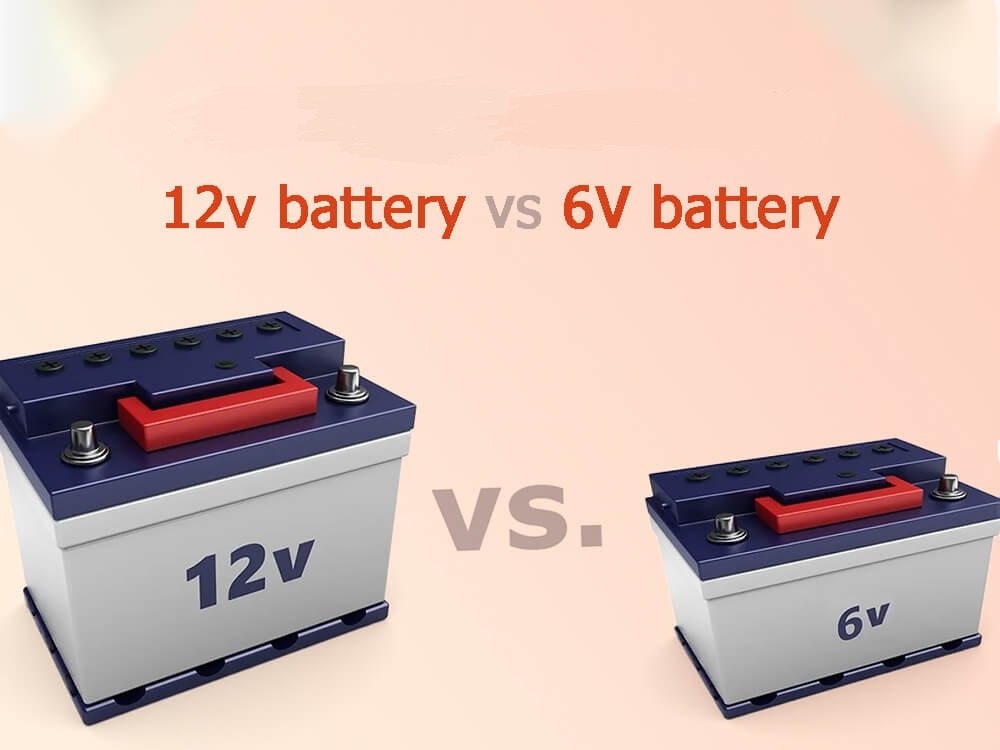
However, 6-volt batteries can also be used in marine applications, usually in pairs. When two 6V deep-cycle batteries are wired in series, they create a 12V battery bank. This setup is sometimes chosen by boaters who want higher capacity and longer-lasting power for house loads, although it is more common in RVs and golf carts than in boats.
Marine electrical systems may be designed for 12V, 24V, or 36V, depending on the boat size, trolling motor setup, onboard equipment, and power demand. Before replacing or charging a marine battery, it is very important to confirm both the battery voltage and the total system voltage.
| Battery Type | Voltage | Common Marine Use |
|---|---|---|
| 12V Marine Starting Battery | 12 volts | Most common battery for starting boat engines and supporting basic electrical systems. |
| 12V Marine Deep-Cycle Battery | 12 volts | Used for trolling motors, lighting, pumps, fish finders, refrigerators, and house loads. |
| 6V Deep-Cycle Battery | 6 volts | Usually used in pairs wired in series to create a 12V bank with strong deep-cycle capacity. |
| 24V Marine System | 24 volts | Often used for larger trolling motors, bow thrusters, or higher-demand marine equipment. |
| 36V Marine System | 36 volts | Common for high-power trolling motor setups and larger electric marine systems. |
Most marine batteries are 12V because many boats are built around 12-volt electrical systems. A 12V battery is simple, available, and compatible with a wide range of marine chargers, engines, accessories, and electronics. This makes replacement easier and reduces confusion for most boat owners.
A 12V marine starting battery is designed to deliver a strong burst of power for engine cranking. It provides high current for a short period, then is recharged by the engine’s charging system. This type of battery is not ideal for being deeply discharged repeatedly.
A 12V deep-cycle marine battery is different. It is designed to deliver steady power over a longer time. Deep-cycle batteries are better for trolling motors, onboard electronics, lights, pumps, sound systems, and other equipment that may run while the engine is off.
Some marine batteries are dual-purpose batteries. These are designed to provide both starting ability and moderate deep-cycle performance. They can be useful for smaller boats with limited battery space, but for demanding setups, separate starting and deep-cycle batteries are often better.
A single 6V battery is not suitable for most standard 12V marine systems. However, two 6V batteries can be connected in series to create 12 volts. In a series connection, voltage adds together while amp-hour capacity remains the same.
For example, if you connect two 6V 225Ah batteries in series, the result is a 12V 225Ah battery bank. This can provide strong deep-cycle power for house loads. Some boaters like this setup because many 6V deep-cycle batteries are built with thick plates and durable construction.
The downside is that a 6V setup requires more space, more wiring, and at least two batteries. It can also add weight. For many boats, a high-quality 12V deep-cycle marine battery is simpler and easier to manage.
Although most individual marine batteries are 12V, the total boat system may be higher. A 24V system can be created by wiring two 12V batteries in series. A 36V system can be created by wiring three 12V batteries in series.
Higher-voltage systems are often used for trolling motors because they can provide more efficient power delivery and stronger performance. Larger boats may also use higher-voltage systems for certain equipment. This is why it is important to check the full wiring setup before assuming your boat only uses 12 volts.
If your boat has multiple batteries, look carefully at how they are connected. Series wiring increases voltage. Parallel wiring keeps voltage the same but increases capacity. Incorrect wiring can damage equipment or create safety risks.
The easiest way to tell whether a marine battery is 6V or 12V is to check the battery label. Most batteries clearly show the voltage on the case. Look for markings such as “6V,” “12V,” “DC 12V,” or similar information.
If the label is missing or unreadable, you can count the cells on traditional flooded lead-acid batteries. Each lead-acid cell is about 2 volts. A 6V battery usually has 3 cells, while a 12V battery usually has 6 cells. On batteries with visible filler caps, this may mean 3 caps for a 6V battery and 6 caps for a 12V battery.
You can also use a multimeter. A fully charged 6V lead-acid battery usually reads around 6.3 to 6.4 volts at rest. A fully charged 12V lead-acid battery usually reads around 12.6 to 12.8 volts at rest. Lithium batteries may show different resting voltages depending on chemistry and battery management system design, so always check the manufacturer’s specifications.
Charging a 6V battery with a 12V charger is unsafe and should not be done. A 12V charger applies too much voltage to a 6V battery. This can cause overheating, excessive gassing, electrolyte loss, swelling, internal damage, leakage, or battery failure.
In flooded lead-acid batteries, using a 12V charger on a 6V battery may boil the electrolyte and expose the plates. This can permanently reduce capacity and shorten battery life. In sealed batteries, excessive voltage can create pressure buildup and damage the battery case.
The only time a 12V charger should be used with 6V batteries is when two 6V batteries are correctly wired in series as a 12V bank. In that case, the charger connects across the full 12V bank, not across one individual 6V battery. If you are unsure about the wiring, ask a qualified marine technician before charging.
To choose the right marine battery, start with your application. If you need to start an engine, choose a marine starting battery with the correct cranking power. If you need to run electronics, lighting, or a trolling motor for long periods, choose a deep-cycle marine battery. If you need both functions in a small boat, a dual-purpose battery may be suitable.
Next, confirm voltage. Most boats use 12V batteries, but trolling motors and larger systems may require 24V or 36V battery banks. Also consider battery chemistry. Flooded lead-acid batteries are affordable but need maintenance. AGM batteries are sealed and easier to care for. Lithium marine batteries are lighter, longer-lasting, and efficient, but they require compatible charging equipment.
Most marine batteries are 12 volt because 12V is the standard for starting boat engines and running common onboard electronics. However, 6V deep-cycle batteries can also be used in pairs, wired in series to create a 12V system with strong capacity for house loads.
Marine electrical systems may be 12V, 24V, or 36V, depending on the boat and equipment. To identify a battery’s voltage, check the label, count the cells, or use a multimeter. Never charge a single 6V battery with a 12V charger. Matching the battery voltage, charger voltage, and boat system voltage is essential for safe and reliable marine power.