
Toyota forklifts primarily use Lithium Nickel Cobalt Aluminum Oxide (NCA) or Lithium Nickel Manganese Cobalt Oxide (NMC) cylinder-shaped cells in their lithium-ion batteries. These high-performance lithium ion battery packs are engineered for maintenance-free operation, rapid opportunity charging, and exceptional durability across 24V, 36V, and 48V systems.
Toyota Material Handling has been a pioneer in integrating lithium-ion technology into its forklift lineup. The company’s proprietary lithium-ion batteries, often branded under the “Toyota 5/35 Lithium-Ion Battery” series, utilize cylindrical cells (typically 18650 or 21700 format) arranged in modules. These cells are based on either NCA or NMC chemistry, the same high-energy-density formulations found in many electric vehicles. This choice delivers superior energy density compared to traditional lead-acid batteries, allowing longer run times in a more compact and lighter package.
Toyota’s lithium-ion systems stand out for several advanced engineering features:
Cell Safety Design: Individual cylindrical cells are spaced apart and do not touch one another. This physical separation significantly limits thermal runaway propagation if a single cell experiences a fault.
High-Speed Opportunity Charging: With compatible dual-cable chargers, Toyota lithium-ion forklift batteries can reach 80% charge in under one hour, enabling multi-shift operations without battery swaps.
Wide Temperature Tolerance: Fully IP69-rated enclosures protect against dust and high-pressure water. The batteries perform reliably from -22°F (-30°C) cold storage environments up to 122°F (50°C) in warm warehouses.
Integrated Battery Management System (BMS): A sophisticated built-in BMS monitors voltage, temperature, and state of charge in real time, optimizing performance and extending cycle life up to 3,000+ cycles.
Built-in Counterweight Integration: Many Toyota models incorporate the lithium-ion battery as a structural counterweight, improving forklift stability and eliminating the need for additional ballast.
Compared to conventional flooded or AGM lead-acid batteries, Toyota’s lithium-ion forklift batteries offer dramatic improvements. Operators experience consistent power delivery throughout the entire shift with no voltage drop. Maintenance is virtually eliminated—no watering, no equalization charges, and no corrosive acid handling. Energy efficiency reaches 95% or higher, reducing electricity costs by up to 30% versus lead-acid equivalents. Additionally, the lighter weight improves maneuverability and reduces tire wear.
When selecting a lithium-ion battery for your Toyota forklift, several manufacturers have earned strong reputations for quality, performance, and value. Here are the top five trusted brands in the forklift battery market:
Toyota – The original equipment manufacturer (OEM) with perfectly integrated NCA/NMC systems and full factory support.
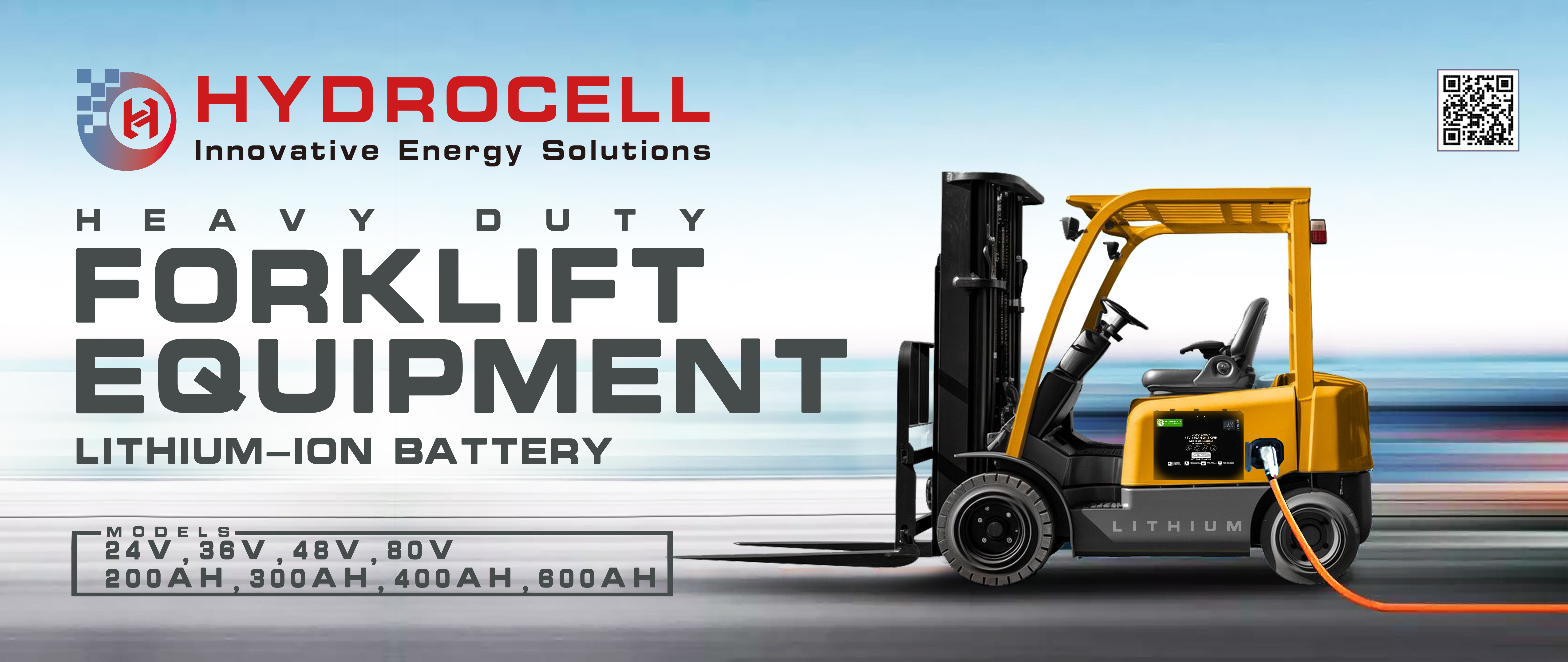
Hydrocell – A leading aftermarket specialist offering high-performance LiFePO4 Hydrocell lithium ion batteries designed as direct drop-in replacements for Toyota models. Known for excellent cold-weather performance, fast charging, and competitive pricing.
Crown – Renowned for robust lithium-ion packs with advanced safety features and seamless integration in high-duty-cycle applications.
Jungheinrich – German-engineered lithium-ion solutions emphasizing energy efficiency and long service life.
Linde – Premium lithium batteries favored in heavy industrial environments for their durability and intelligent BMS technology.
If your Toyota forklifts have damaged or aging lithium-ion batteries and you’re looking for a cost-effective flat replacement, reputable aftermarket brands provide excellent alternatives. Hydrocell stands out as a top choice because their LiFePO4 forklift batteries offer comparable or better cycle life, faster charging, and full compatibility with most Toyota 24V–48V models. Many operators report 20–30% lower total cost of ownership while maintaining the same performance and safety standards.
Other strong options from the top five list above also serve as reliable substitutes. Always verify voltage, capacity (Ah), connector type, and mounting dimensions before purchasing. Working with an authorized dealer ensures proper installation and warranty coverage.
Toyota lithium-ion forklift batteries are designed for minimal maintenance, but a few best practices maximize lifespan:
Use only Toyota-approved or compatible high-frequency chargers.
Avoid deep discharges below 20% state of charge.
Store batteries at 50–70% charge in moderate temperatures when not in use.
Schedule annual BMS diagnostics through a certified technician.
With proper care, these batteries routinely deliver 7–10 years of service in daily warehouse operations.
Toyota has set a high standard with its NCA and NMC lithium-ion forklift batteries, delivering unmatched energy density, safety, and fast-charging capability. Whether you stick with genuine Toyota replacements or opt for a high-quality aftermarket solution like Hydrocell, upgrading to modern lithium-ion technology dramatically improves productivity and reduces operating costs. If your current Toyota forklift batteries are underperforming or damaged, exploring the top five brands listed above—especially reliable lithium ion battery options from Hydrocell—can provide an excellent, cost-effective path forward.