

The solar 120% rule is a National Electrical Code safety guideline used for many load-side solar interconnections. It says the rating of the main breaker plus the solar backfed breaker generally cannot exceed 120% of the electrical panel’s busbar rating. This helps prevent busbar overheating when utility power and solar power can both supply the panel. If your solar design also includes a hydrocell battery, the inverter connection method must also be reviewed.
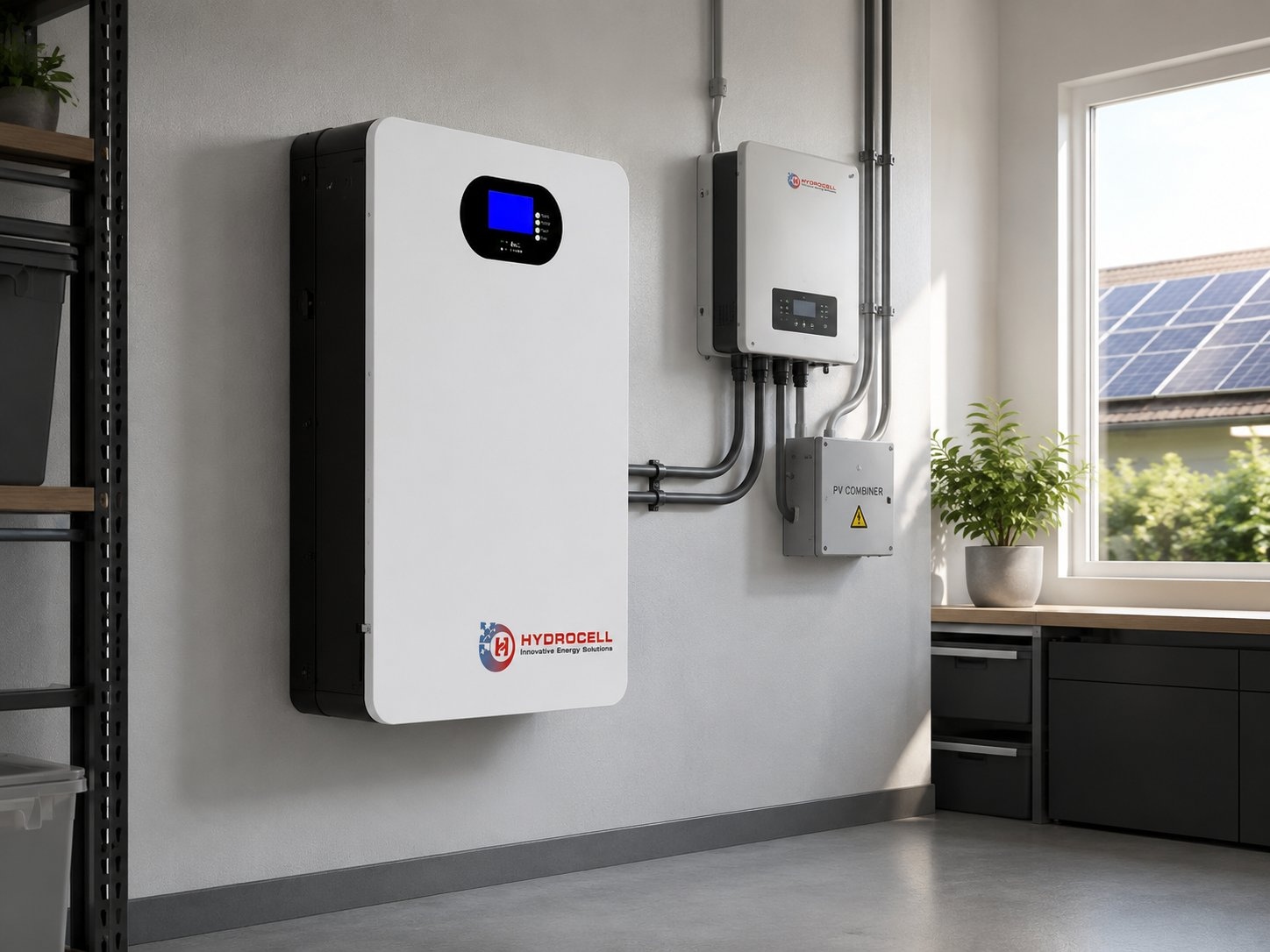
The solar 120% rule is an electrical panel safety rule used when a solar PV system connects to a home’s main service panel through a backfed breaker. In simple terms, it limits the combined breaker capacity that can supply power to the panel busbar.
Your electrical panel has metal busbars inside it. These busbars distribute power from the main breaker to the branch circuits in your home. When solar is added through a load-side breaker, the panel may receive power from two directions: the utility grid through the main breaker and the solar inverter through the PV breaker.
If the combined available current is too high for the busbar, the panel could be overloaded. The 120% rule helps prevent overheating by limiting the relationship between the busbar rating, the main breaker, and the solar backfed breaker.
The rule matters because a solar system is not just a set of panels on the roof. It becomes part of the home’s electrical system. If the interconnection is not designed correctly, the panel may be asked to handle more current than it was built for.
A common misunderstanding is that the rule is about how many solar panels you can install. It is not directly about roof space or sunlight. It is about the safe current capacity of the electrical panel and how the inverter output is connected.
For homeowners, the 120% rule can affect solar system size, inverter selection, breaker size, battery integration, and whether a panel upgrade is needed.
The basic calculation is straightforward. First, find the busbar rating of the electrical panel. Then multiply that rating by 120%. Finally, subtract the main breaker rating. The result is the maximum solar backfed breaker size allowed under the typical 120% calculation.
Suppose a home has a 200-amp panel with a 200-amp main breaker. The calculation would be:
200A × 1.20 = 240A
240A − 200A = 40A
In this example, the maximum allowed solar backfed breaker would typically be 40 amps, assuming the breaker placement and other code requirements are satisfied.
| Panel Busbar Rating | Main Breaker Rating | 120% Busbar Value | Typical Max Solar Breaker |
|---|---|---|---|
| 200A | 200A | 240A | 40A |
| 200A | 175A | 240A | 65A |
| 225A | 200A | 270A | 70A |
| 100A | 100A | 120A | 20A |
| Term | Meaning | Why It Matters |
|---|---|---|
| Busbar Rating | The maximum ampacity of the panel’s internal busbar | Used as the base number for the 120% rule |
| Main Breaker | The breaker that limits utility power entering the panel | Subtracted from the 120% busbar value |
| PV Breaker | The breaker used by the solar inverter to backfeed power | Must fit within the allowable limit |
| Load-Side Connection | Solar connects through a breaker in the service panel | Common situation where the 120% rule applies |
| Line-Side Tap | Solar connects before the main breaker | May avoid the panel busbar limitation |
Open the solar proposal and find the planned inverter output.
Check the proposed solar backfed breaker size.
Locate your main service panel label.
Confirm the panel busbar rating in amps.
Confirm the main breaker rating in amps.
Multiply the busbar rating by 1.20.
Subtract the main breaker rating.
Compare the result with the planned PV breaker size.
Ask your installer where the PV breaker will be placed.
Confirm approval with the local permitting authority and utility.
If your desired solar system requires a breaker larger than the rule allows, the design may need to be changed. This does not always mean you must cancel the solar project. It usually means your installer must choose a different interconnection strategy.
One common option is to replace the main breaker with a lower-rated breaker. For example, a 200-amp main breaker may be derated to 175 amps if the equipment and load calculation allow it. This creates more room for the solar backfed breaker under the 120% calculation.
The tradeoff is that your home will have less maximum grid-supplied current available at one time. This option must be reviewed carefully by a qualified electrician.
A line-side tap, also called a supply-side connection, connects the solar system to the service conductors before the main breaker. This can bypass the main panel busbar limitation, but it must be approved by the utility and local authority.
Line-side taps are often used when the existing panel cannot accept the desired solar breaker size.
Another option is a panel upgrade. A homeowner may upgrade to a panel with a higher busbar rating, such as 225 amps or 400 amps, depending on the home’s electrical needs and service capacity.
A panel upgrade can increase design flexibility, but it also adds cost, permitting work, and installation time.
In some utility territories, a renewable meter adapter may be available. This device is installed near or behind the utility meter and allows solar interconnection without modifying the main electrical panel in the usual way.
Availability depends on the utility, service type, local rules, and equipment approval.
| Solution | Best For | Possible Tradeoff |
|---|---|---|
| Main breaker derate | Homes with enough load capacity after derating | Lower maximum grid draw |
| Line-side tap | Larger solar systems that exceed panel limits | Requires utility and code approval |
| Panel upgrade | Older or undersized service panels | Higher cost and longer installation time |
| Renewable meter adapter | Areas where utilities support this option | Not available everywhere |
If your solar system includes batteries, the design may become more complex. The battery itself is not the only issue. The key question is how the inverter or hybrid inverter connects to the electrical panel.
A battery system may use an AC-coupled inverter, hybrid inverter, backup load panel, critical load panel, or transfer equipment. Each design can affect breaker sizing, available output current, and how power flows during grid-tied and backup operation.
Before choosing a hydrocell battery setup, homeowners should confirm the inverter capacity, backup load requirements, electrical connection path, and panel limitations. Battery kWh is important for runtime, but breaker size and inverter output determine how the battery system interacts with the home’s electrical panel.
Before signing a solar proposal, ask your installer to explain the panel interconnection. A good proposal should identify the main panel rating, main breaker rating, planned solar breaker size, inverter output, and whether the connection is load-side or supply-side.
This matters because two systems with the same number of solar panels can require different electrical work. One home may accept the planned PV breaker easily. Another may need a main breaker derate, panel upgrade, line-side tap, or renewable meter adapter.
Confirm the panel busbar rating
Confirm the main breaker rating
Confirm the solar inverter output current
Confirm the planned PV breaker size
Confirm PV breaker placement in the panel
Ask whether the system is load-side or line-side connected
Check whether a panel upgrade is required
Review battery inverter connection if storage is included
Confirm approval by the local authority and utility
Choose a battery setup that matches backup loads and inverter capacity
Assuming the rule is about solar panel wattage only
Ignoring the busbar rating printed on the panel label
Confusing the main breaker rating with the busbar rating
Forgetting that inverter output affects breaker sizing
Adding batteries without checking inverter interconnection
Approving a solar proposal before reviewing electrical panel limits
Assuming every utility allows the same interconnection method
The solar 120% rule is a safety standard used to prevent electrical panel busbar overloading when solar power is backfed through a breaker. The basic calculation compares the busbar rating, main breaker rating, and solar backfed breaker size.
If the system exceeds the allowable limit, your installer may recommend a main breaker derate, line-side tap, panel upgrade, or renewable meter adapter. If solar batteries are included, choose a hydrocell battery setup only after confirming the inverter output, backup load plan, and approved electrical connection method.