

Modern lithium Batteries are much more advanced than traditional battery technologies because they rely on precise electronic monitoring. The Battery Management System works like the brain of the battery, continuously checking important conditions and making adjustments to maintain safe operation.
Without a properly designed BMS, lithium battery cells could experience overcharging, excessive discharge, overheating, or uneven performance, which may reduce battery life or create safety risks.
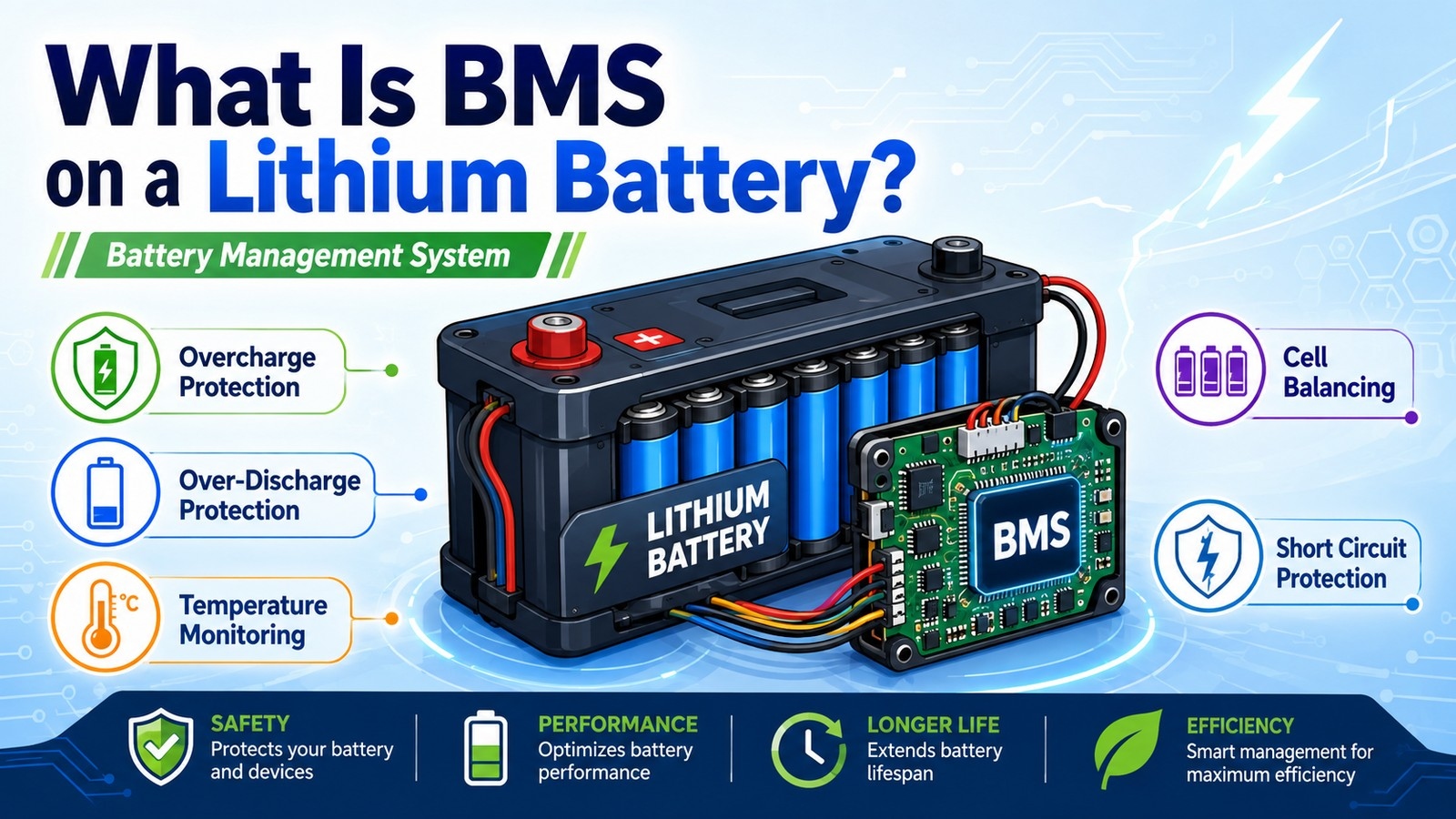
What Does BMS Stand For?
BMS stands for Battery Management System. It is an electronic system installed inside lithium battery packs to monitor and control battery performance.
A lithium battery contains multiple individual cells connected together. Each cell must operate within a specific voltage and temperature range. The BMS ensures every cell works safely and efficiently.
| BMS Function | Purpose |
|---|---|
| Voltage monitoring | Tracks individual cell voltage levels |
| Temperature monitoring | Prevents overheating or cold charging damage |
| Current control | Protects against excessive electrical flow |
| Cell balancing | Keeps all battery cells working evenly |
| Safety protection | Prevents dangerous operating conditions |
Why Is a BMS Necessary for a Lithium Battery?
A BMS is essential because lithium battery cells require precise control. Unlike simple battery systems, lithium batteries cannot safely operate without protection and monitoring.
The BMS helps prevent:
Battery damage
Reduced lifespan
Overheating
Electrical failures
Unsafe charging conditions
High-quality lithium battery systems use advanced BMS technology to maintain reliable performance in applications such as golf carts, RVs, marine systems, and industrial equipment.
Key Functions of a BMS
1. Overcharge Protection
One of the most important functions of a BMS is preventing overcharging.
When lithium cells reach their maximum voltage, the BMS stops or limits charging to prevent excessive voltage buildup.
| Without BMS | With BMS |
|---|---|
| Cells may become overcharged | Charging is automatically controlled |
| Higher heat generation risk | Improved thermal safety |
| Reduced battery lifespan | Longer battery performance |
2. Over-Discharge Protection
Lithium batteries should not be discharged below their safe voltage range.
The BMS disconnects the load when the battery reaches a critical low voltage level, preventing permanent cell damage.
Avoid repeatedly draining lithium batteries completely. Allowing the BMS to protect the battery is useful, but proper usage habits help maximize lifespan.
3. Temperature Monitoring
Temperature has a major impact on lithium battery performance.
The BMS monitors temperature sensors and can reduce or stop operation when conditions become unsafe.
| Temperature Condition | BMS Response |
|---|---|
| High temperature | Reduces power or stops operation |
| Low temperature charging | Prevents harmful charging conditions |
| Normal temperature | Allows regular operation |
4. Cell Balancing
A lithium battery pack contains multiple cells. Over time, individual cells may have slightly different voltage levels.
The BMS balances these cells to ensure:
Equal charging performance
Maximum available capacity
Longer battery life
Improved reliability
5. Short Circuit Protection
If an electrical fault occurs, the BMS can immediately disconnect the battery output to prevent excessive current flow.
This protects:
Battery cells
Connected equipment
Electrical wiring
Users
How Does a Battery Management System Work?
The BMS continuously collects information from sensors inside the battery pack and makes decisions based on programmed safety limits.
| Step | BMS Action |
|---|---|
| 1. Monitor | Measures voltage, current, and temperature |
| 2. Analyze | Compares information with safe operating limits |
| 3. Protect | Adjusts or disconnects power when necessary |
| 4. Balance | Maintains equal cell performance |
Can You Run a Lithium Battery Without BMS?
Technically, some lithium battery cells can operate without a BMS, but it is not recommended for most applications.
Without a BMS, users lose important protection features:
| Missing Protection | Possible Result |
|---|---|
| No overcharge protection | Cell damage or overheating |
| No temperature control | Unsafe operating conditions |
| No cell balancing | Uneven battery performance |
| No short circuit protection | Electrical safety risks |
For this reason, most commercial lithium batteries include an integrated BMS as a standard safety feature.
Does the Hydrocell Battery Come Equipped With a BMS?
Yes. The entire Hydrocell battery lineup is equipped with an integrated Battery Management System.
Hydrocell lithium batteries use BMS technology to provide:
Battery protection
Reliable charging control
Cell balancing
Temperature monitoring
Long-term performance
Hydrocell batteries are designed as easy replacement solutions for vehicles and equipment from manufacturers such as Yamaha, Club Car, E-Z-GO, and other applications.
| Hydrocell BMS Feature | Benefit |
|---|---|
| Overcharge protection | Protects battery during charging |
| Over-discharge protection | Prevents deep discharge damage |
| Temperature monitoring | Improves safety in different environments |
| Cell balancing | Maximizes usable capacity |
How to Maintain a Lithium Battery With BMS
Use the correct charger.
Always use a charger designed for lithium battery chemistry.Avoid extreme temperatures.
Protect batteries from excessive heat and freezing conditions.Monitor battery condition.
Pay attention to unusual performance changes.Store properly.
Keep batteries at an appropriate charge level during storage.Follow manufacturer instructions.
Use recommended charging and operating procedures.
Benefits of Lithium Batteries With BMS Technology
| Benefit | Description |
|---|---|
| Improved safety | Protects against abnormal conditions |
| Longer lifespan | Reduces unnecessary cell stress |
| Better performance | Maintains consistent power output |
| Lower maintenance | Requires less routine service |
Conclusion
A BMS is one of the most important components inside a lithium battery. It protects the battery, manages charging, balances cells, and ensures safe operation.
Running a lithium battery without a BMS removes critical safety protections and may shorten battery life. For modern applications, an integrated BMS is an essential feature.
Hydrocell batteries include built-in BMS technology across the entire product lineup, providing reliable performance and easy installation for golf carts, vehicles, and other battery-powered systems.
Choosing a quality lithium battery with an advanced BMS helps ensure safer operation, longer service life, and better energy efficiency.