

You can make an electric golf cart feel faster without upgrades by improving efficiency, reducing drag, and keeping it well maintained.
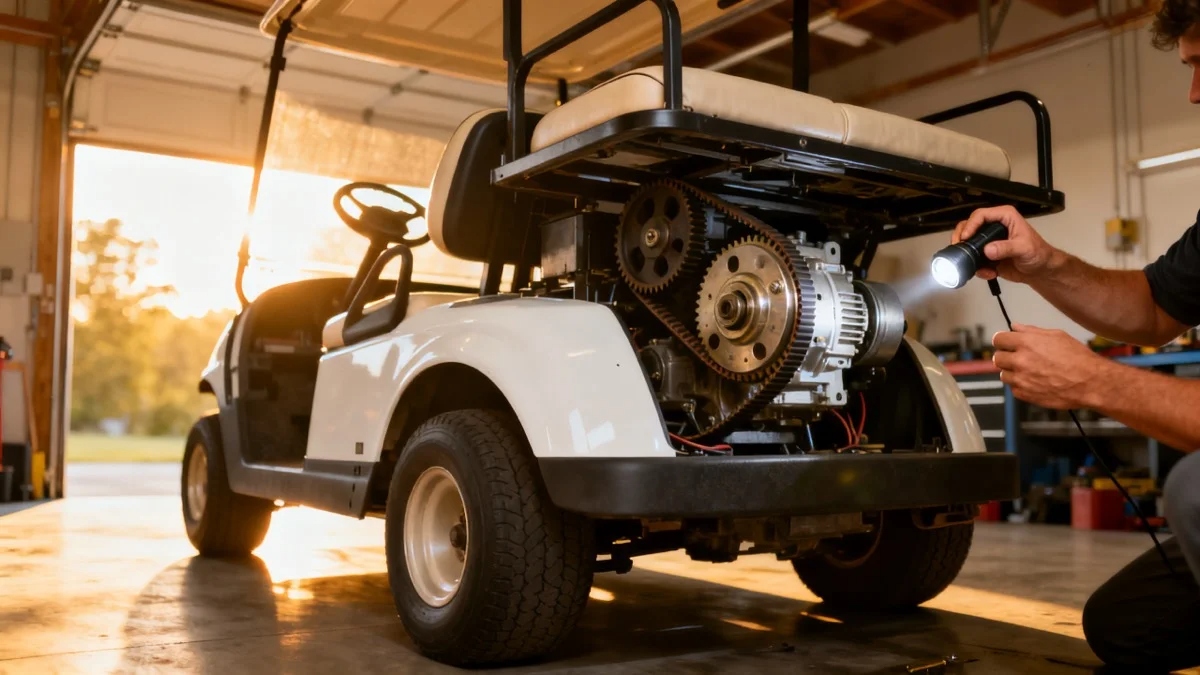
Many golf cart owners ask, “How do I make an electric golf cart faster without upgrades?” The most realistic answer is that you cannot dramatically increase top speed without changing major components such as the motor, controller, battery system, or gearing. However, you can often improve the cart’s performance by making sure it is operating at peak efficiency. A poorly maintained cart may feel slow, sluggish, or weak even if all its original parts are still capable of better performance.
Instead of buying major hardware upgrades, focus on maintenance, battery health, tire condition, brake drag, weight reduction, and proper charging habits. These steps may not turn a standard cart into a high-performance machine, but they can help restore lost speed, improve acceleration, extend driving range, and make the cart feel smoother and more responsive.
If your electric golf cart uses an aging battery pack, power delivery may decline significantly. In that case, performance improvement may require battery service or eventual replacement. High-quality golf cart battery solutions from hydrocell can support stronger long-term reliability when it is time to replace worn batteries. But if your goal is to avoid upgrades for now, start with the optimization steps below.
| Optimization Method | How It Helps Performance |
|---|---|
| Proper Tire Inflation | Correct tire pressure reduces rolling resistance and helps the cart move more efficiently. |
| Weight Reduction | Removing unnecessary cargo helps improve acceleration and reduces strain on the motor and battery. |
| Battery Maintenance | Clean, healthy, fully charged batteries provide stronger and more consistent power output. |
| Full Charging Cycles | Consistent charging helps prevent weak performance caused by low voltage or poor battery condition. |
| Brake Inspection | Dragging brakes can slow the cart and waste battery power, so proper brake adjustment is important. |
| Controller or Governor Review | Some carts have speed settings, but changes should only be made within manufacturer limits and local rules. |
Tire pressure is one of the easiest and most overlooked ways to improve electric golf cart performance. Underinflated tires create more rolling resistance. This means the motor must work harder to move the cart, which can reduce speed, shorten range, and make acceleration feel weaker.
Check the recommended tire pressure printed on the tire sidewall or in the owner’s manual. Do not overinflate the tires in an attempt to gain speed. Overinflation can reduce traction, create a harsher ride, and increase tire wear. The goal is to use the correct pressure, not the highest possible pressure.
Also inspect the tires for uneven wear, cracks, flat spots, or damage. Old or worn tires may not roll efficiently. If the cart feels slow even on flat ground, tire condition should be one of the first things to check.
Weight affects speed and acceleration. The more weight an electric golf cart carries, the harder the motor and battery must work. If you regularly carry tools, coolers, bags, accessories, or unused cargo, removing extra weight can help the cart feel lighter and more responsive.
This does not mean removing safety equipment or essential parts. It simply means avoiding unnecessary load. A cart carrying four passengers, golf bags, cargo, and accessories will usually accelerate more slowly than the same cart carrying one or two passengers with minimal cargo.
Weight reduction is especially helpful on hills. Electric carts draw more power when climbing, and excess weight makes the climb harder. Keeping the cart clean and lightly loaded can improve both performance and battery efficiency.
The battery system is the heart of an electric golf cart. If the batteries are weak, dirty, undercharged, or poorly connected, the cart may feel slow no matter how well the rest of the vehicle is maintained.
For lead-acid batteries, check water levels if the battery type requires watering. Use only distilled water and follow the manufacturer’s fill-level instructions. Low water levels can damage battery plates and reduce performance. Also inspect battery terminals for corrosion. Dirty or corroded connections can restrict current flow and make the cart feel sluggish.
For lithium batteries, maintenance is usually simpler, but charging habits and connection checks still matter. Make sure the battery is charged with the correct charger and that all cables are secure. If the cart has a battery management system display, pay attention to warnings or unusual voltage behavior.
If the battery pack is old, performance may naturally decline. A cart with worn batteries may lose speed on hills, slow down faster under load, or show reduced range. In that situation, cleaning and charging can help temporarily, but replacement may eventually be necessary.
A partially charged battery pack can make a golf cart feel slower. Electric carts depend on strong voltage to deliver good acceleration and steady speed. If you often drive with a low charge, the cart may feel weak and may lose power more quickly.
Charge the cart after use according to the manufacturer’s recommendations. Avoid letting batteries sit discharged for long periods. Lead-acid batteries are especially sensitive to being stored in a low-charge state because sulfation can reduce capacity and shorten battery life.
Do not use a charger that does not match your battery type. A lithium battery and a lead-acid battery require different charging profiles. Using the wrong charger can reduce performance, shorten battery life, or damage the battery system.
Dragging brakes can significantly reduce golf cart speed. If the brakes do not fully release, the cart must fight against resistance while driving. This wastes power, reduces range, creates heat, and makes the cart feel slow.
Signs of brake drag include reduced top speed, hot wheel areas after driving, squeaking or rubbing sounds, uneven movement, or a cart that does not roll freely when pushed. If you suspect brake drag, have the brake system inspected and adjusted.
Brake maintenance is also a safety issue. Making a cart faster or more responsive is not useful if it cannot stop properly. Always make sure braking performance is strong before trying to improve speed.
Wheel bearings and alignment also affect rolling efficiency. Worn bearings can create friction, noise, and vibration. Poor alignment can make the cart harder to steer and reduce speed by increasing tire resistance.
If the cart pulls to one side, shakes at speed, wears tires unevenly, or makes grinding noises, it may need inspection. Correcting these mechanical issues can help restore lost performance without upgrading major components.
Some electric golf carts have factory speed settings controlled by a controller, speed sensor, or programmable system. In certain cases, a cart may be set to a conservative speed mode. However, adjusting these settings is not the same as simple maintenance, and it should be handled carefully.
Only authorized technicians should change controller settings. Incorrect settings can damage the motor, controller, battery, or drivetrain. They can also make the cart unsafe by increasing speed beyond what the brakes, tires, suspension, or frame are designed to handle.
If you believe your cart is electronically limited below its intended performance range, consult the manufacturer, dealer, or qualified technician. Do not bypass safety systems or use unverified instructions. A small setting change can create major safety and reliability problems if done incorrectly.
Dirt, debris, mud, grass, and corrosion can all reduce efficiency. Clean the underbody, wheels, battery compartment, and moving parts regularly. A clean cart is easier to inspect and less likely to suffer from hidden mechanical resistance.
Pay attention to unusual sounds, vibration, reduced acceleration, or sudden range loss. These symptoms may point to mechanical wear, electrical resistance, battery issues, or drivetrain problems. Fixing small issues early can help the cart perform better without expensive upgrades.
Golf carts are designed for controlled, moderate-speed travel. Even if you can improve performance, stability must remain a priority. Higher speed can increase rollover risk, especially during sharp turns, on uneven ground, or when carrying passengers.
Keep turns smooth and avoid sudden steering movements. Do not overload the cart. Make sure tires are in good condition and properly inflated. Stability matters more than a small increase in speed.
A faster cart needs more distance to stop. Before trying to improve speed, make sure the brakes are properly adjusted and responsive. If the cart already has weak brakes, increasing performance can make it unsafe.
Test braking in a safe, open area. The cart should stop smoothly and predictably without pulling to one side, grinding, or feeling delayed.
Local rules may limit how fast a golf cart can be driven and where it can be used. Communities, golf courses, resorts, and residential areas may also have their own speed limits. Always follow local regulations and property rules.
Making a cart faster is not worth fines, safety risks, or restricted access. The best performance setup is one that improves efficiency while keeping the cart safe and compliant.
You can make an electric golf cart faster without major upgrades by restoring lost efficiency rather than forcing extra power. Start with proper tire inflation, weight reduction, battery maintenance, full charging cycles, brake inspection, wheel bearing checks, alignment, and general mechanical care. These steps can help the cart accelerate better, roll more smoothly, and maintain stronger performance.
Controller or governor settings may affect speed on some carts, but they should only be reviewed by qualified personnel and adjusted within safe, legal, and manufacturer-approved limits. True speed gains usually require hardware upgrades, but careful maintenance can make a standard electric golf cart feel noticeably better. For long-term performance, battery health is especially important, and a quality battery solution from hydrocell can be a smart option when replacement becomes necessary.