

Golf carts are no longer simple low-speed vehicles used only on golf courses. Today, they are widely used in resorts, campuses, gated communities, farms, parks, industrial facilities, warehouses, airports, hotels, and neighborhoods. As these vehicles become more important for daily transportation and utility work, the demand for better power systems is growing quickly. Owners want longer range, faster charging, lower maintenance, lighter weight, better performance, and cleaner energy.
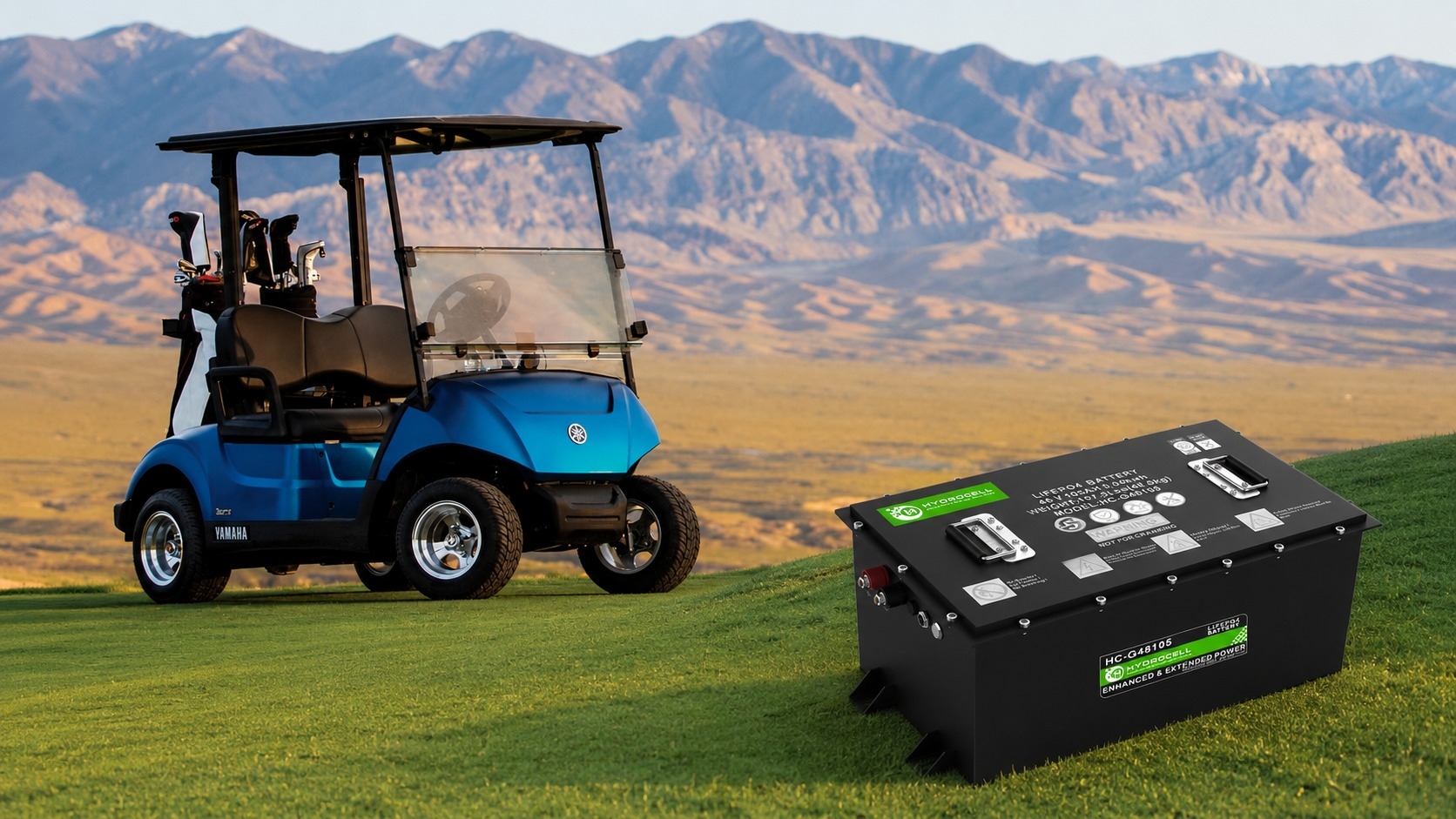
The future of golf cart power is electric, dominated by high-performance lithium-ion batteries and smart energy management systems. These power sources are replacing traditional gas and lead-acid models by delivering longer driving ranges, faster charging times, stable power output, and a nearly maintenance-free ownership experience. For many users, upgrading the battery is now one of the most effective ways to improve the performance and value of a golf cart.
Among the most important technologies leading this change are Lithium Iron Phosphate (LiFePO4) batteries. Known for safety, long cycle life, energy efficiency, and stable performance, LiFePO4 batteries are becoming a preferred power source for modern golf carts. Brands such as hydrocell are helping golf cart owners move away from older battery systems and toward a smarter, more reliable electric future.
For many years, golf carts were powered mainly by gas engines or lead-acid batteries. Gas carts offered range and power, but they also produced noise, emissions, vibration, fuel costs, and regular engine maintenance. Lead-acid electric carts reduced emissions during use, but they introduced other problems such as heavy battery weight, water maintenance, acid corrosion, slow charging, and shorter usable life.
Lithium battery technology solves many of these problems. A lithium-powered golf cart can operate more quietly than a gas cart, requires less routine maintenance than a lead-acid cart, and often delivers stronger, more consistent power. Instead of losing performance as the battery charge drops, lithium systems can provide steadier voltage throughout the discharge cycle. This means better acceleration, smoother hill climbing, and more predictable range.
For golf courses, resorts, communities, and personal owners, this shift is not only about convenience. It is also about total cost of ownership. While lithium batteries often cost more upfront, they can save money over time through longer service life, reduced maintenance, fewer replacements, and improved energy efficiency.
The lithium revolution is changing how golf carts are designed, used, and maintained. Traditional lead-acid battery packs are heavy, require regular watering, and can lose capacity if they are deeply discharged or left uncharged. Lithium batteries are lighter, more efficient, and easier to manage.
One of the biggest advantages of lithium golf cart batteries is weight reduction. Removing excess battery weight can improve acceleration, reduce stress on suspension components, and make the cart feel more responsive. A lighter battery system can also help improve energy efficiency because the vehicle does not need to work as hard to move.
Another major advantage is longer cycle life. A quality lithium battery can often support many more charge and discharge cycles than a traditional lead-acid pack. This is especially important for golf carts used every day in commercial environments. Resorts, campuses, and fleet operators need vehicles that can stay in service with minimal downtime.
Fast charging is also a key benefit. Lead-acid batteries often require long charging times and careful charging habits. Lithium batteries can usually charge more quickly and may support partial charging without the same concerns associated with lead-acid chemistry. This gives owners more flexibility and helps keep carts available throughout the day.
Lithium Iron Phosphate, or LiFePO4, is one of the most popular lithium chemistries for golf cart applications. It is valued for thermal stability, safety, long lifespan, and reliable power delivery. These qualities make it especially useful for vehicles that carry passengers, operate outdoors, and experience frequent charge cycles.
LiFePO4 batteries are also well suited for users who want a low-maintenance ownership experience. Unlike flooded lead-acid batteries, they do not require watering. They also avoid acid spills, acid fumes, terminal corrosion from electrolyte leakage, and the routine equalization charging often associated with lead-acid systems.
Hydrocell produces Lithium Iron Phosphate (LiFePO4) batteries that help golf carts achieve a better power source. For owners who want longer range, better acceleration, reduced maintenance, and improved reliability, a Hydrocell LiFePO4 battery can be a practical upgrade from traditional lead-acid systems.
The future of golf cart power is not only about the battery chemistry. It is also about smart energy management. Modern lithium batteries often include a Battery Management System, or BMS, that monitors and protects the battery during charging and discharging. A BMS can help manage voltage, current, temperature, cell balance, and safety protection.
This smart technology helps prevent common battery problems such as overcharging, over-discharging, overheating, and short circuits. It also helps the battery operate more efficiently and safely. For golf cart owners, this means less guesswork and more confidence.
Smart energy management can also support better range estimation and performance monitoring. As golf carts become more advanced, owners may increasingly expect digital displays, mobile app connectivity, battery health indicators, and real-time charging information. These features can help users understand how much range remains, when to charge, and how the battery is performing over time.
For fleet operators, smart battery data can be even more valuable. Resorts, rental companies, golf courses, and campus transportation teams can use battery information to schedule charging, rotate vehicles, reduce downtime, and improve fleet efficiency.
Sustainability is another major reason the golf cart industry is moving toward advanced electric power. Gas-powered carts require fuel, produce emissions, and create more noise. Electric carts powered by efficient lithium batteries offer a cleaner and quieter alternative.
Golf courses and resorts are especially interested in reducing noise and improving the guest experience. Quiet electric carts allow players, guests, residents, and staff to move around without the smell and sound of small gas engines. Communities and campuses also benefit from quieter transportation that is easier to manage in shared public spaces.
Lithium batteries also support a longer service life, which can reduce the frequency of battery replacements. Longer-lasting batteries may reduce waste and improve lifecycle efficiency compared with battery systems that need replacement more often. While all batteries must eventually be recycled responsibly, longer battery life can be an important part of a more sustainable power strategy.
The market is shifting because buyers are becoming more educated. Many owners now understand that the cheapest battery is not always the best long-term value. They are comparing range, weight, charging speed, maintenance needs, lifespan, and total cost of ownership before making a decision.
In the coming years, golf cart power systems will likely become lighter, smarter, and more efficient. Battery packs may offer better range in smaller sizes. Chargers may become faster and more intelligent. Digital monitoring may become more common. Golf carts may also integrate more advanced accessories, lighting, navigation, entertainment, and utility features that require stable battery power.
As these vehicles take on more roles beyond the golf course, battery quality will become even more important. A cart used for neighborhood transportation, resort service, commercial maintenance, or campus mobility needs dependable power every day. Lithium technology is well positioned to meet these expectations.
The future of golf cart power is electric, efficient, and intelligent. Traditional gas and lead-acid systems are being replaced by lithium-ion batteries, smart battery management, and cleaner energy solutions. For many owners, the benefits are clear: longer range, faster charging, lower maintenance, better performance, and a more convenient ownership experience.
Hydrocell LiFePO4 golf cart batteries represent this shift toward better power technology. By using Lithium Iron Phosphate battery chemistry and modern energy management, they help golf carts become more reliable, easier to maintain, and better prepared for the future of personal and commercial electric transportation.