

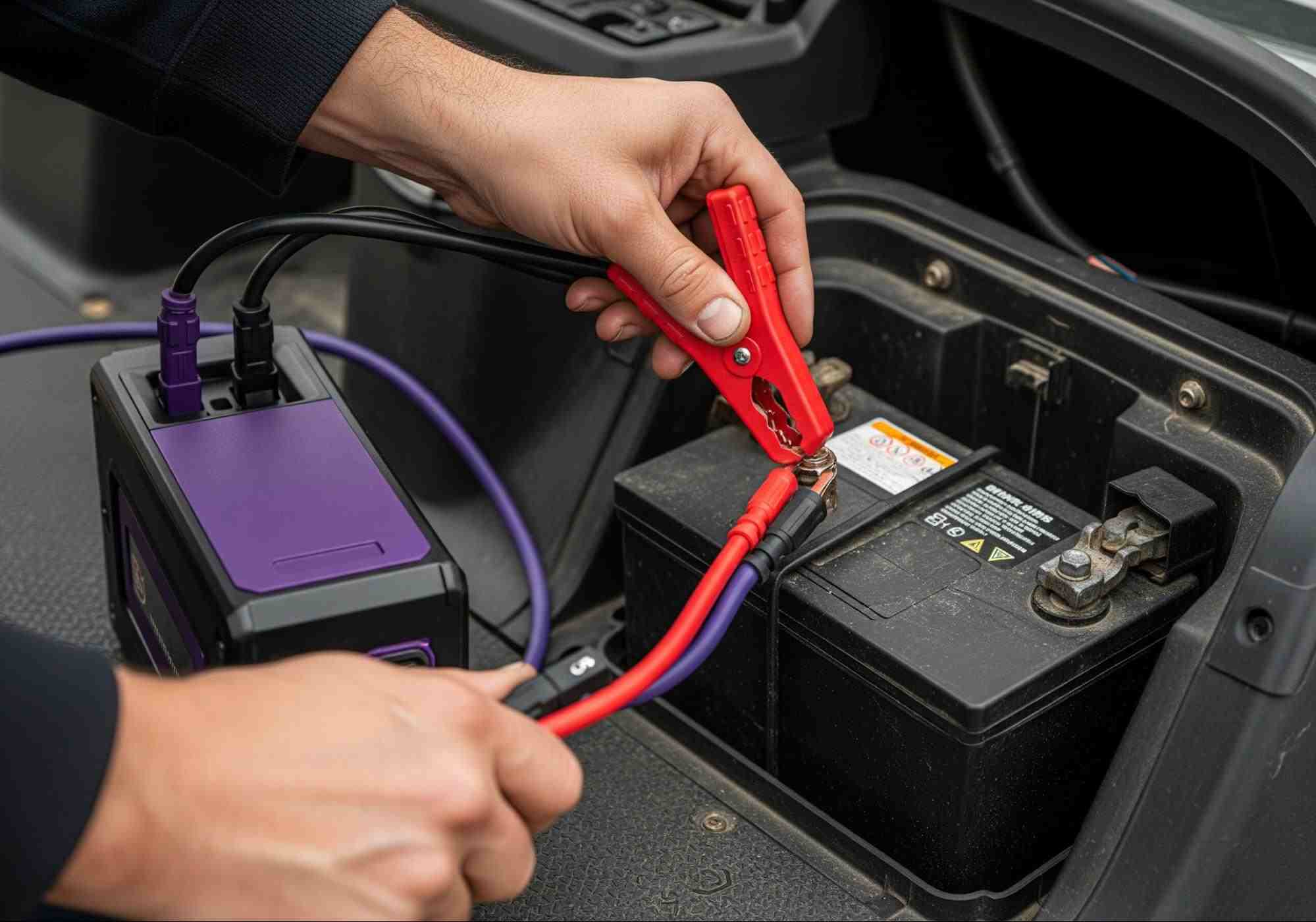
Deeply discharged golf cart batteries often won't accept a charge from the standard onboard charger. Manually "waking" them with a separate 12V automotive charger or booster for 10–30 minutes per battery (or pair) raises voltage enough for the main charger to take over and complete a full cycle safely.
Completely dead batteries—common after long storage or overuse—enter a low-voltage state that onboard chargers reject for safety. Proper revival prevents permanent damage while restoring full capacity, extending pack life significantly.
Lead-acid batteries produce explosive hydrogen gas during charging. Always prioritize protection:
Wear safety glasses and gloves.
Work in a well-ventilated area (outdoors preferred).
Disconnect the main golf cart charger from the batteries.
Check electrolyte levels and top off with distilled water if low (never overfill).
Avoid sparks—connect positive first, negative last when attaching chargers.
Isolate Batteries: Place cart in TOW mode and disconnect the main pack if needed for access.
Prepare Booster Charger: Use a quality 12V automotive charger (10–20A recommended) or jump starter.
Charge Individually or in Pairs: For 36V/48V systems, connect booster to one battery (or series pair) at a time. Charge 10–30 minutes until voltage reads ~12.6V+ per 12V battery.
Monitor Closely: Watch for excessive heat or gassing—stop immediately if noticed.
Reconnect Main Charger: Once all batteries show sufficient voltage, reconnect the golf cart's primary charger for a complete cycle.
Equalize if Needed: Run an equalization charge (per manufacturer guidelines) to balance cells.
Most carts revive successfully with this method. Persistent failure may indicate permanently damaged cells requiring replacement.
Avoid deep discharges by storing at partial charge and using maintenance chargers during off-season. Regular watering, clean terminals, and proper storage extend lead-acid life considerably.
Absolutely—modern lithium golf cart batteries eliminate deep-discharge issues entirely. They accept opportunity charging anytime, require zero maintenance (no watering), deliver consistent power without voltage sag, and last 5–10x longer than lead-acid. Though initial investment is higher, dramatically lower operating costs, lighter weight, and extended range make lithium conversion a smart upgrade for frequent users.
Recharging dead golf cart batteries demands caution but follows straightforward steps with the right tools. Following safety protocols and proper technique restores most packs effectively. For hassle-free future performance, many owners find lithium conversion transforms their cart experience completely.